
 en
en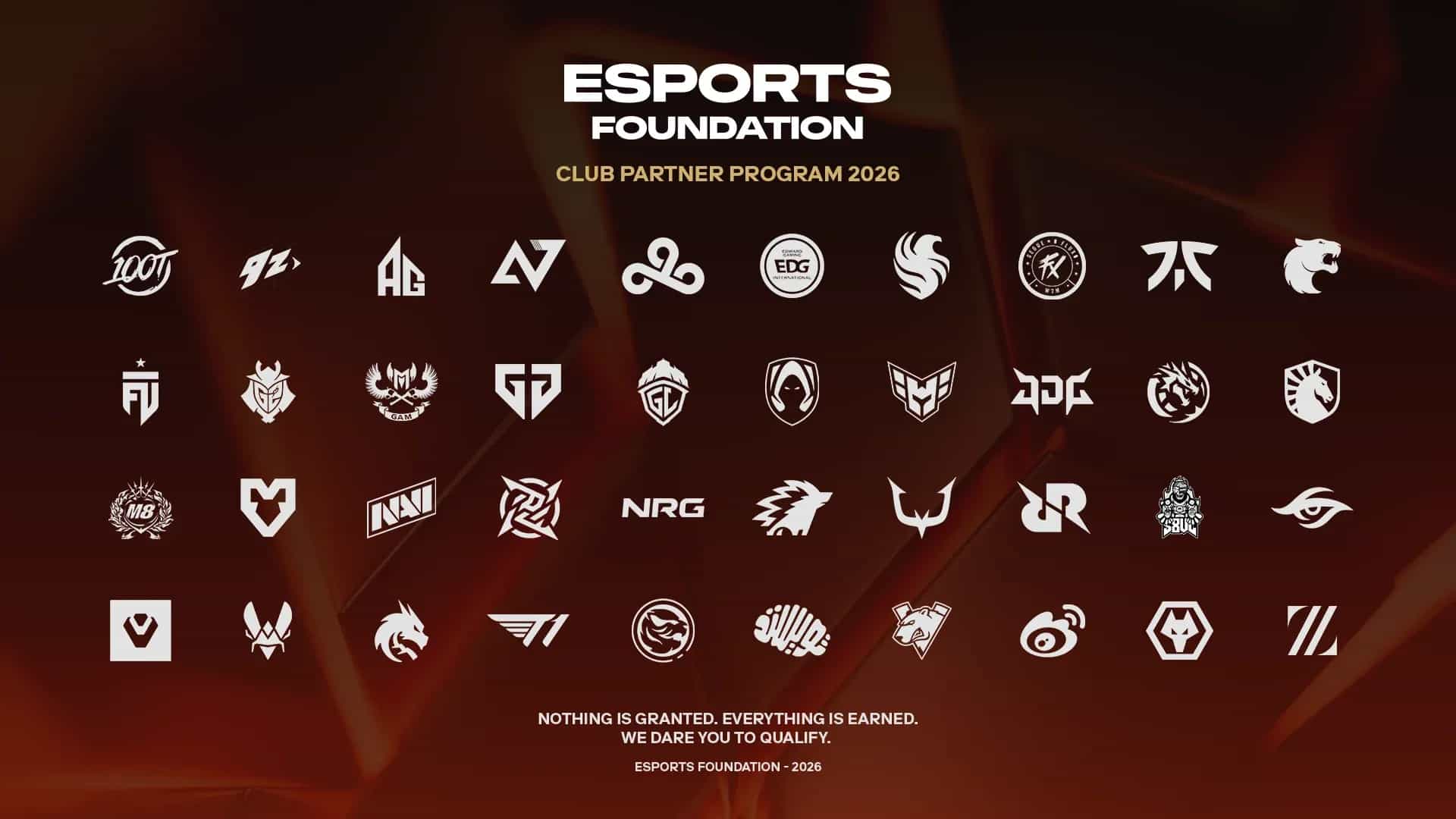
Esports Foundation Club Partner Program: Understanding the Engine Behind EWC

Strafe Esports was recently invited to and attended an Esports Foundation Rumble event. All excerpts, quotes, questions, and answers occurred and were obtained from this session. Some of the quotes have been lightly edited for readability.
The Club Partner Program (CPP) is one of the Esports Foundation (EF) flagship initiatives centered around providing investment and incentives to a select group of esports organizations that are members of the club. It consists of its own ecosystem of support for organizations as well as providing said organizations with a separate track for winning prize money – the Club Championship.
In attending the Rumble, notable CEOs and leaders from multiple major esports organizations including G2 Esports, Team Vitality, Team Liquid, and Cloud9, discussed the experience, benefits, and challenges in their role as club members.
An Ecosystem that Financially Supports Esports Organizations
Debuting in 2024, the Club Partner Program is now in its third edition. "40 leading esports clubs in the program, combining to reach over 300 million fans," said Hans Jagnow, Director of Club, National Teams, and Player Relations at the Esports Foundation. “Over the last year, the EF has committed $100M between the club championship and the club program, directly going to the clubs," he confirmed.
“Each individual club can earn up to $1 million per year, depending on their performance and ideas.”
Team Liquid: Developing Structure in Underdeveloped Regions
Steve Arhancet, owner and Co-CEO of Team Liquid, praised the program, stating: “It gives us a way to activate our fans around those specific games."
“There’s a very global nature associated with [the EWC and CPP]. So, what we try to do is activate those fan bases and local regions for those respective games,” Arhancet added. He referred to Team Liquid’s efforts in Southeast Asia, with Mobile Legends: Bang Bang (MLBB) teams in Indonesia and the Philippines. “Because we have MLBB teams there for example, we’ll look to that region to activate marketing activations and campaigns, both digital and IRL around that community."
Arhancet underlined that what the Club Partner Program offered was structure, offering opportunities for partner organizations to submit proposals, which are then measured against different proposals from other organizations in terms of quantifiable metrics. “It’s a good framing for developers, publishers, the EWC, and even our own metrics with regards to fandom,” he concluded.
G2 Esports: Building a Global Fanbase
“The superfan program was definitely the highlight for me,” said Alban Dechelotte, CEO of G2 Esports. “The Esports World Cup, I think it’s exactly what we are – a mix of competition and entertainment.”
He highlighted that while G2 had these two aspects, on the competitive side, G2’s philosophy was quality over quantity. “If you look at the AAA games (League of Legends, VALORANT and CS), we’re probably the only team in the world that qualified to all the majors in the 3 games in 2025.”
He concluded by reminding that G2 was a “very unique team” in that they were not “affiliated to any one country in particular.”
“There are very few sports in the world that have this unique connection like Ferrari or All Blacks. This kind of iconic team that is not only loved in their country but also has this kind of flair that they are the second favorite team from everybody in the world. This is the intent that we have at G2 by conveying this entertainment, a tongue-in-cheek celebration of fandom.”
Team Vitality: Growing in a Sustainable Fashion
Danny Engels, Chief International Officer for Team Vitality, weighed in on the French organization’s involvement with the Club Partner Program. “Vitality saw the Esports World Cup as a great chance to grow beyond being just the French club,” he said. “We definitely have the goal of becoming one of the best organizations in the world and becoming a global powerhouse.”
Engels noted the impact of the Esports Foundation and the Club Program, and how it had allowed Vitality to enter new games, new territories, and sign more high-profile players. In past years, Vitality had been relatively successful in the Club Championship, finishing around 5th-6th place. However, Engels has affirmed that this year, the organization intends to be less cautious and more ambitious, and push for a higher placement to rival organizations like Team Liquid.
The Club Partner Program: Exclusivity is the Name of the Game
So, we’ve established from the esports organizations’ perspectives (at least for the bigger ones), the Esports Foundation and Club Partner Program is a powerful ally in expanding reach, whether that be structure, fandom or growth. But the Club Partner Program is not open to all.
Across a multitude of applications and considerations, each year, 40 esports organizations are selected. And for that year, those organizations gain access to 6-figure funding, strategic collaboration, fan-growth initiatives and incentives. Suffice to say, there’s plenty of motivation for any esports organization in the current esports climate to pursue a spot.
"We're not a dedicated revenue model. What we're doing is helping clubs invest into creating the capabilities of being more diverse within their offering. That means they're doing better content. They have more people working on exactly those, marketing, campaigns, creating more capabilities to address partner needs."
“There are essentially 4 criteria that we’re looking at when weighing applications,” said Jagnow. The first is competitive integrity. “The competitiveness, the performance, the number of rosters, the games that the organization is active as well as their competitive history is all really important for us.”
Second is the level of fan engagement that the organization attracts. “The Club Partner Program is very much focused on engaging fans through state-of-the-art content, interesting storylines, building really good communication around esports. We’re looking at that potential to activate fans in the best way possible”.
Third is creativity. “We’re looking for clubs with a great amount of ambition, crazy ideas, that want to really push ahead and go forward.” Lastly, regional distribution of our current member lineup is a major consideration. “We’re really looking to make sure that we’re living up to the World Cup name and be present with our partnerships on a global scale.”
Part of the Club Partner Program’s mandate is that it reallocates a majority of its slots each year in an effort to maintain the highly competitive application process. This is why esports organizations that we’ve seen in previous iterations of the Club Partner Program are notably absent this time around.
“Each year, everyone brings their numbers, their pitches, their ideas, their passion to us and we need to make a very hard decision,” Jagnow revealed. “We have 100-175 applicants per year, and we need to make the hard decision to tailor those down to the 32 slots that we have (8 slots are directly given to the top 8 organizations from the previous Club Championship).”
A Global Venture Filled with Ambition: How are the Organizations Coping?
With a project like the Esports World Cup with grand ambitions of such diversity, it would most certainly be a challenge for even the most seasoned of esports organizations to take on. The funding provided by the Club Partner Program goes, according to partner organizations, a good way towards empowering organizations to take those steps for expansion. Even then, there is still economic pressure.
“We have 13 different entities under the Team Liquid enterprise,” said Arhancet. “We publish content in 30 different languages every single day. Our HR and finance teams both think I’m a little crazy for how much global expansion we’ve done”. “You have to have a fairly complex view of each of these games,” he concedes. “And then as those games grow or wane in popularity, we need to make investment or divestment decisions accordingly.”
Dechelotte chimed in as well to speak on G2's recipe for fan conversion: "I think there's sometimes a confusion between followers and fans," he began. "It's very clear that if you add new players, new games, new countries, you'll no doubt escalate your number of followers mechanically."
"But the big question is how do you build this long-term?" he poses. "For us, this is by converting these followers into true genuine fans of G2. We have our secret sauce, which is not so secret. I think it's a lot of unique tone of voice, content storytelling that we believe bridges the games. I think this is very important for us to create this cultural moment of collaboration with music, with fashion, with art that make us very special and unique so that the fans choose us," he concludes.
To continue, Vitality brought their own fresh perspective. "We shouldn't be hiring players just for the EWC because the longevity behind the investment doesn't really stick," says Engels. Furthermore, he said, if they "only hired players for the Esports World Cup", esports organizations would end up having to pay premiums on those players' salaries on top of having a much harder time convincing players to join their organization.
Jagnow further added to the discussion, stating: “But I think being good in the Club Championship is not only about fielding 20 game rosters (even though that helps quite a bit), but it is also about being good at those games you’re in. Even with 3 very good games, you stand a really good chance of scoring highly within the Club Championship.”
"I think what we have created over the last couple of years is one of the most ambitious partnership models in global sport and entertainment."
Conclusion
Whatever thoughts one may have on the Esports World Cup, the Club Partner Program is undoubtedly a welcome oasis for teams traversing the dunes. The prospect of high-level esports organizations expanding into more regions, more esports titles gaining recognition and a bigger following are all positives to take away.
The growth of esports over the past decade has been a true spectacle, from the emerging fandoms, the thunderous tournament arenas, and the ever-visible passion. After examining and listening to the impact of the Club Partner Program on the biggest esports organizations in the world, it’s become clear how vital the program has become to the continued success and growth of many of the major esports organizations.
As we look towards the next decade, the challenge becomes how not to rely on this singular engine to serve as the propeller, but instead work towards a more sustainable pipeline of financial structure and development by using it as a starting block.
Featured Image Credit: Esports Foundation