
 en
en
What Drives Viewership: Breaking Down Esports Success
Ganesh Jadhav
Ganesh Jadhav
18 Sep, 2025, 08:34
|Last updated: 18 Sep, 2025, 08:45
At its core, esports is a marketing tool for competitive games to showcase the full spectrum of the possibilities. What started as local LAN parties and gaming conventions has now grown into a full-fledged industry; an industry that fills arenas, supports thousands of careers and impacts millions of lives daily.
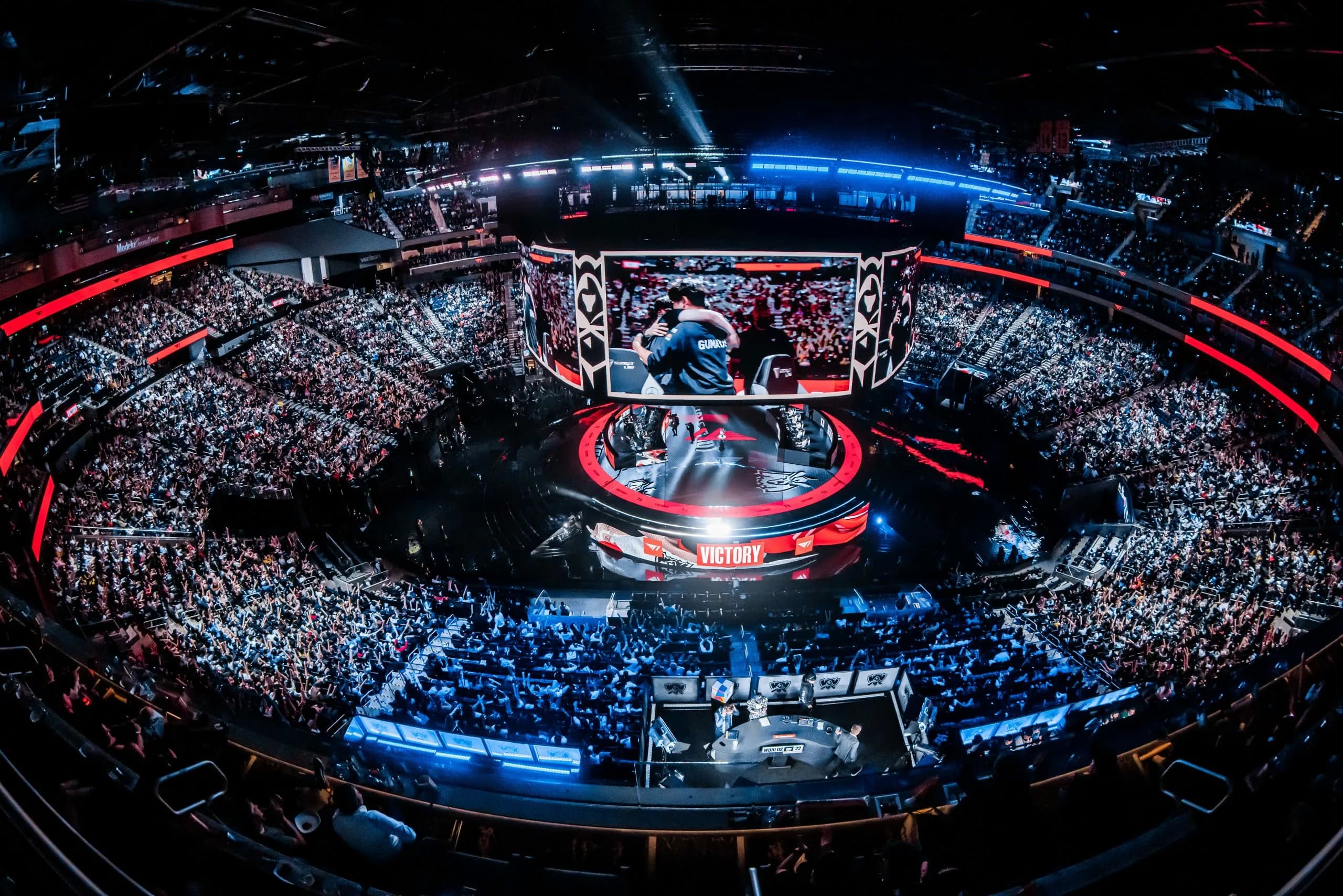
These events that started small, now support an investment market with a humble valuation of $3.7 billion (2025) and is expected to rise to $40 billion before 2034. This growing valuation underlines the increasingly visible impact of gaming and the adjoined esports sub-culture.
With multiple industry leaders taking an interest in the sector, it realistically won’t be long before esports become as ubiquitous as traditional sports.
10 years of Growth
In 1972, a group of Stanford students organized the “Intergalactic Spacewar Olympics”, a university-wide Spacewar! tournament. The grand prize was a one-year subscription to the Rolling Stone magazine. This was the first recorded “esports” tournament featuring players competing in a video game for a grand prize.
However modest, this congregation of gaming enthusiasts laid the very first brick in the towering structure of modern esports.
Initially, esports scenes were limited to arcades. Later, organizations like Cyberathlete Professional League (1997) and World Cyber Games (2000) laid the groundwork for international competitions. And with the rise of streaming with the launch of Twitch in 2011, the world of esports took another major leap.
In the last 10 years, millions of viewers worldwide have tuned in on Twitch from the comfort of their homes to watch their favorite players lift the trophies.
Only last year, 6.8 million people tuned in to watch Lee “Faker” Sang-hyeok, League of Legends’ greatest player, lift his 5th Worlds trophy.

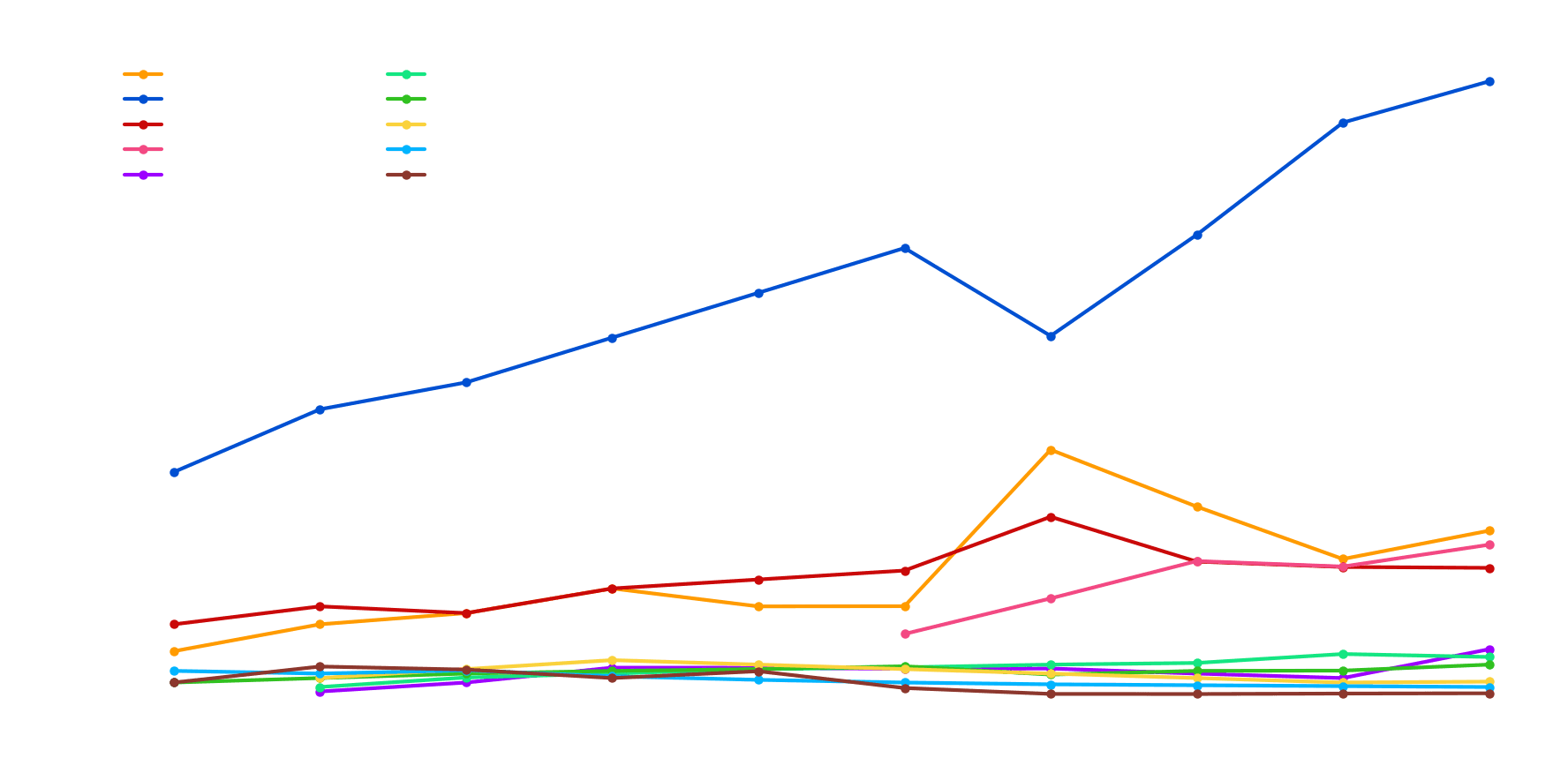
The upward trend in the viewership is visible across different titles. Just like with so many other aspects of our lives, COVID took a toll on esports viewership, though viewership numbers seem to be recovering smoothly.
Along with the older titles, new games join the wider esports’ community and continue to find an audience. The recent GeoGuesser World Cup 2025 clocking in 363K peak viewers or Chess’ inclusion in the 2025 Esports World Cup both serve as a testament to esports growing influence on the chronically online world.
Is Viewership a Sign of a Successful Esport?
But is viewership truly a marker for a successful esports or an esports’ growth?
With each event’s increasing grandeur, the cost to organize them has been increasing exponentially, meaning that even with millions of people watching live, tournament organizers cannot recover the money needed to host events.
Then, does viewership mean nothing? Well yes and no.
Viewership does translate to the size of a game’s community, irrespective of whether they play the game or purely enjoy the esports’ side of it.
It also represents the potential market for companies to advertise their products. A market that can be reached by sponsoring tournaments, teams or individual players. A market to launch their products, especially computer peripherals, energy drinks, and more. At the end of the day what is this world but a large advertisement for human ingenuity.
This means that not only does viewership matter, but it is also a strong representation of an esports’ growth and its influence.
Now that we have established the importance of the viewership, what impacts viewership? Is it an attractive prize pool? The size of the specific esport’s community? Does dev activity and the game’s current popularity impact its viewership?
Let’s explore these individual factors.
Money Matters
An exorbitant prize pool is not only a solid motivation for any competitor but it can also act as a strong marketing tool for a tournament. Moreover, these monetary rewards also reflect the money flowing into the esport itself, and represent the financial size of its scene. So, to start with, let’s look at the most a tournament had to offer in a specific year.
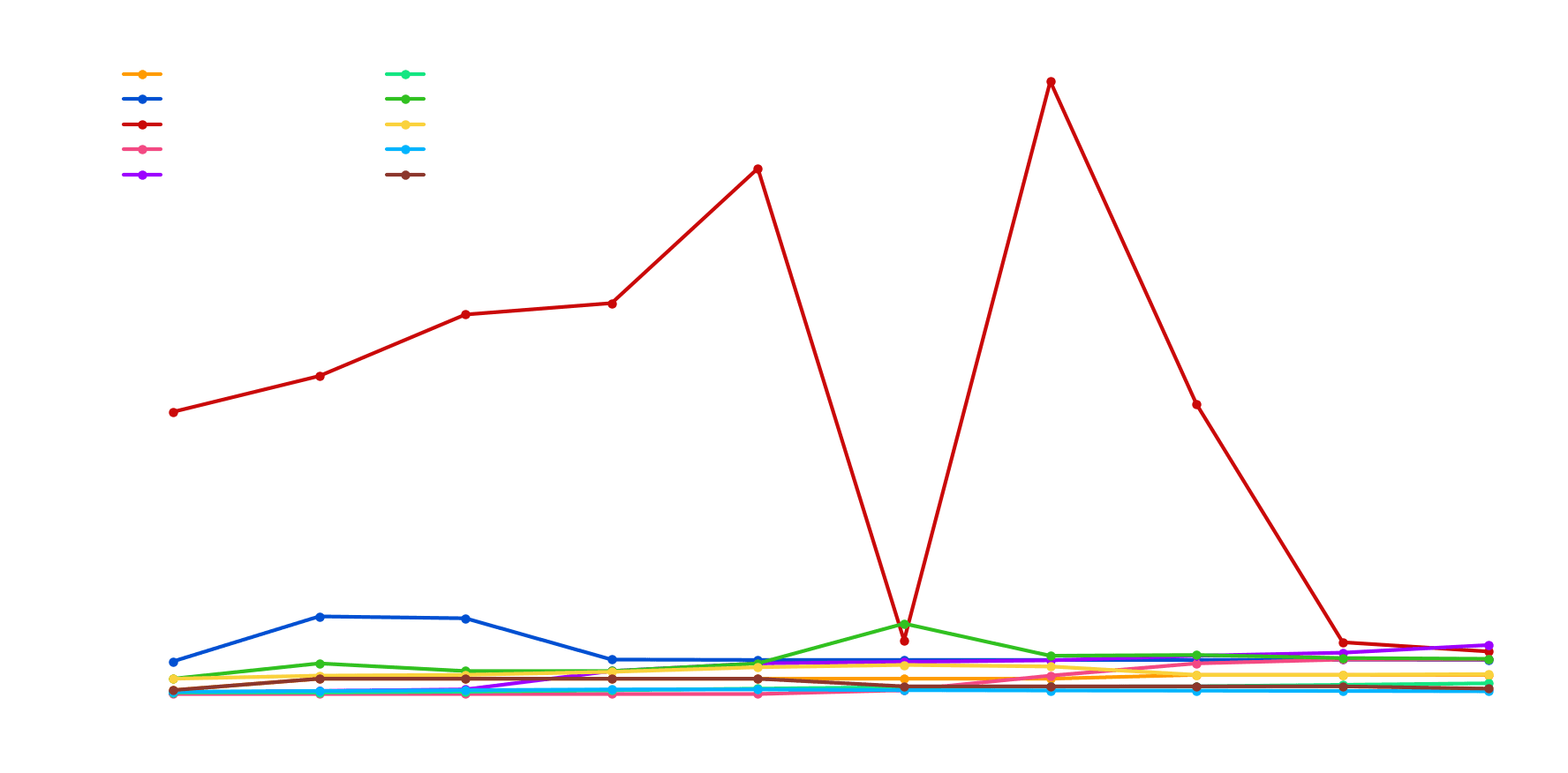
The graph showcases the peak prize pools for an esport. These prize pools, especially for DOTA 2, were heavily influenced by cuts from community investment, and hence feature exorbitant amounts. Other esports do support the players via community bundles, but do not include the amount within the prize pools.
So, what about average prize pools? The issue here is that for DOTA 2 and Counter-Strike the number of tournaments increases on the lower/grassroots level, which does not sport large prize pools, thus skewing the data.
In order to ensure uniformity, considering top 10 events across the titles can give us a clearer picture.
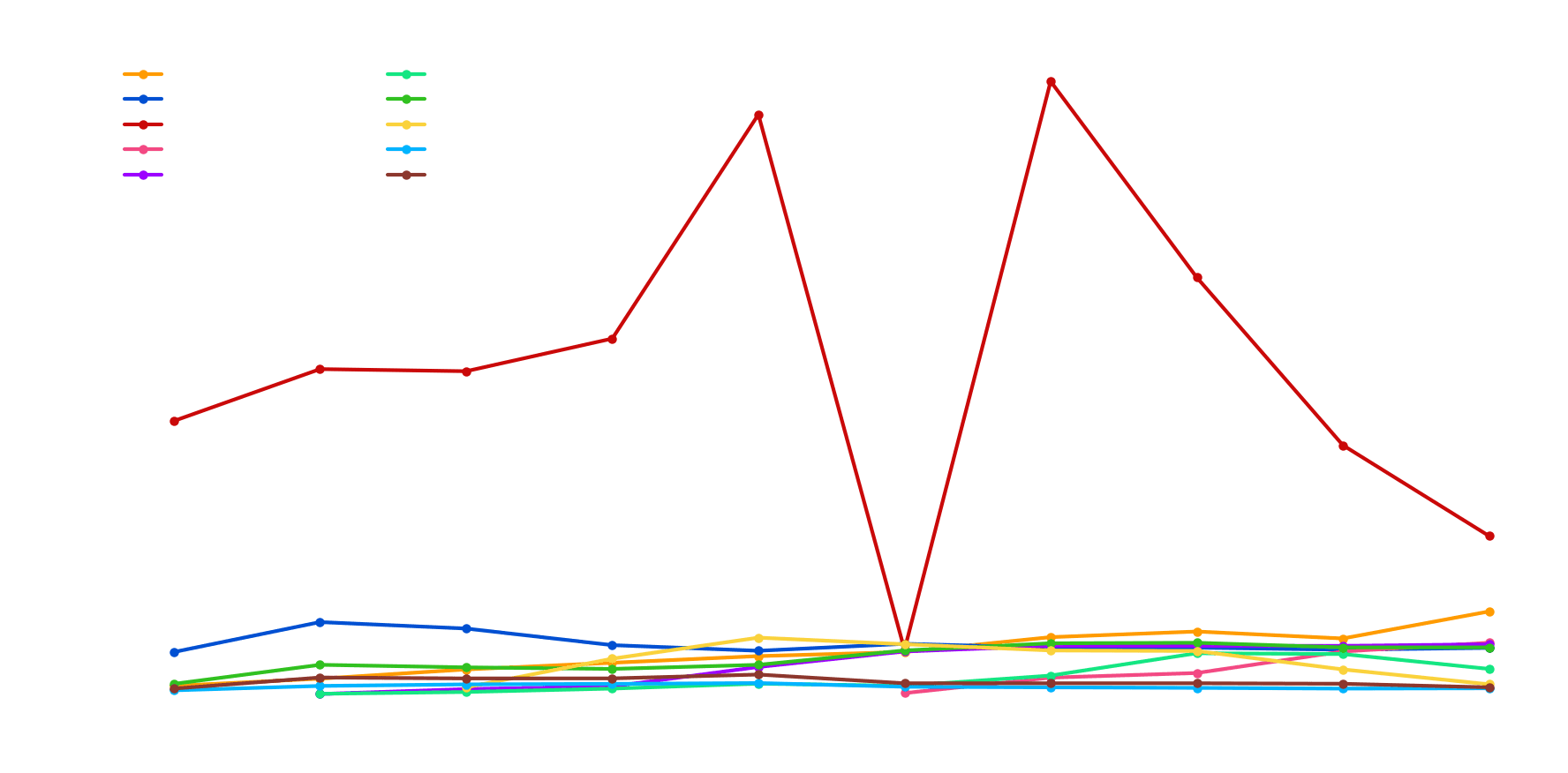
The graph reveals two clear winners in terms of average prize pools: DOTA 2 and Rainbow Six Siege.
DOTA 2’s large prize pools are a result of the crowdfunding model of the earlier years, exponentially increasing the average. Rainbow Six Siege also relies on Ubisoft’s investment into its esport, thus painting an amazing picture in terms of average prize pool.
While both these esports do not necessarily come close to their competitors in terms of viewership, the publisher investment boosts the prize pool numbers.
Players Maketh the Esport
Now, of course, prize pools alone cannot be a metric for an esports’ success since there is more to esports than just tournaments. There are active players whose careers are supported by the ecosystem and the organizations that act as an intermediary.
And for these individuals to engage with the esport’s ecosystem, the ecosystem itself has to be sustainable, meaning the number of organizations within an esport should represent sustainability. Sustainable esports, in turn, allow for more competitors to actively participate, thus increasing the level of competition within it.
To avoid overcomplicating things, we will take into account organizations instead of all the players/staff involved in an esport. As the number of organizations is directly proportional to the number of paid professionals.
![Number of Active Esports Organizations (2015-2024) [approximate values]](/_next/image/?url=https%3A%2F%2Fwww.strafe.com%2Fesports-betting%2Fstrafe-news%2Fwp-content%2Fuploads%2Fsites%2F29%2FNUMBER_OF_ORGANIZATIONS.png&w=3840&q=75)
These charts, however, disregard the semi-pro and amateurs who continue to interact with the esports ecosystem. In the publisher-controlled esports especially, the semi-pro, academy and amateur teams are disregarded.
The Game Makes The Esport
As we established at the start, esports are “essentially a marketing tool for competitive games”, but that’s only half the equation. In most cases, players first discover a game and then the esport, meaning the popularity of the game generally outclasses the popularity of the esport itself.
This means that a substantial and growing player base is a strong marker that the esport will thrive. The player base not only represents the potential viewers of an esport, but individuals that interact with the game itself and invest into the game to keep its wheels turning.
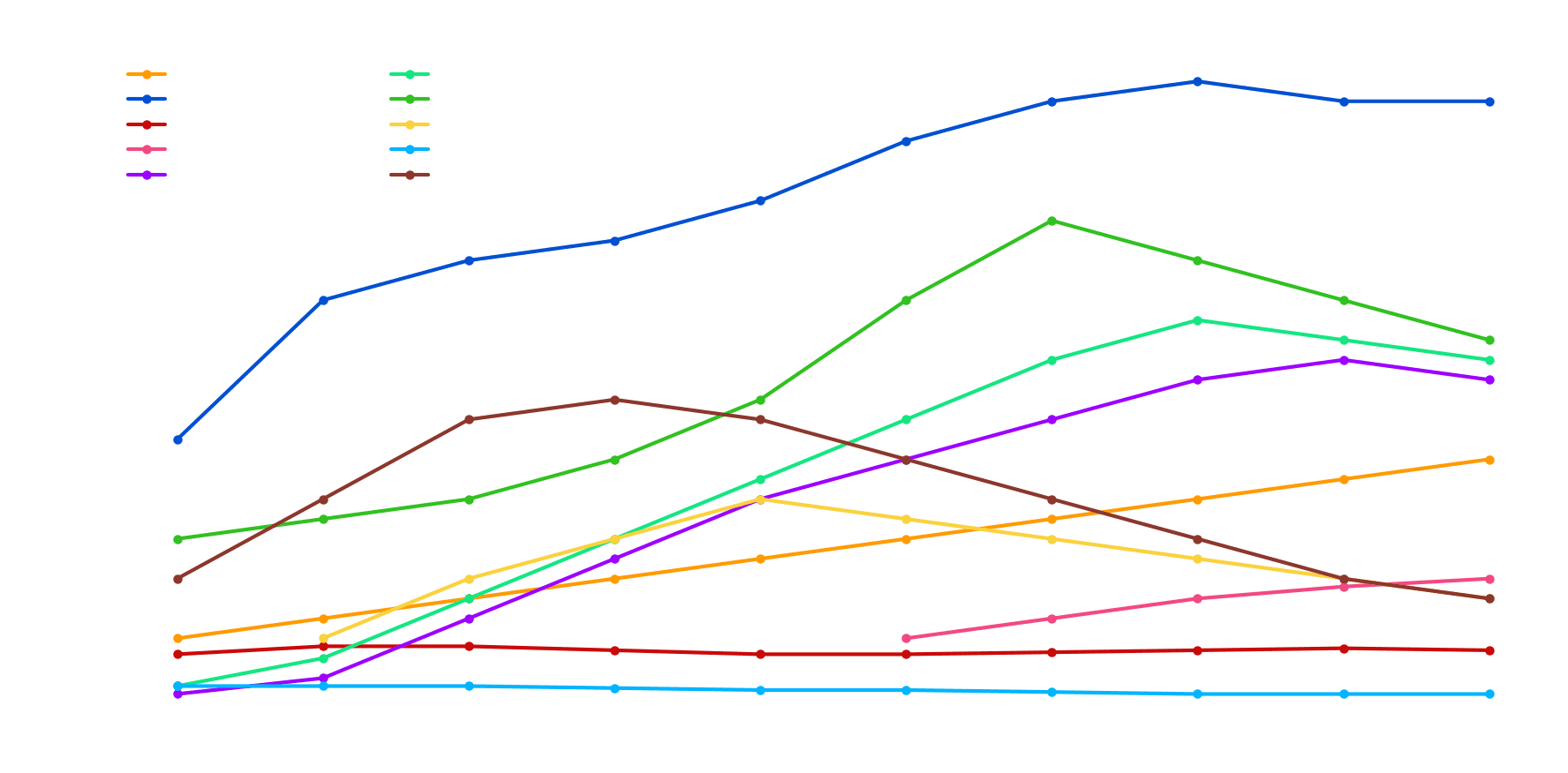
League of Legends, which usually sets viewership records, also boasts a massive active player base. This trend is visible across the various titles where an increase in the player base also results in an increase in viewership. Likewise, a player base decline will result in a viewership decline, as has been the case with games like Overwatch, StarCraft II and Hearthstone.
The only significant outlier here is Call of Duty, where a big chunk of the player base doesn’t interact with its esports scene, which is largely due to the fact that Call of Duty is a casual-friendly game and has a North America-only pro circuit, thus losing much of its international player base as potential audience.
So, What Drives Esports Viewership?
By now, we explored the various factors that play a part in making an esport successful i.e. drive the viewership.
The findings suggest that the biggest factor that drives viewership is the popularity of the game itself. To watch the sport you need to understand the game, and to understand the game, you need to play it. Thus, the game’s popularity largely dictates its viewership.
Counter-Strike, one of the earliest official “esports”, is still largely relevant because it is easy to pick up. Unlike its competitors that heavily depend on character balance, Counter-Strike’s core is simple, and has remained simple through time.
Another major factor is the geographical reach, Riot Games ensures League of Legends grows not only in the West but also in the East. This yielded massive fruits, as now the esport stands head and shoulders above the competition. Riot Games intends to follow a similar path for their first-person shooter (FPS), VALORANT, where it has already seen some strong results.
Games like DOTA 2, Overwatch, Rainbow Six Siege, Rocket League, StarCraft II that aren’t popular around the world aren’t doing as well in terms of viewership. This suggests that the game’s popularity and its geographical reach are the dominant factors in terms of viewership.
What’s Next?
For starters, esports will continue to grow. From approximately $405 million in 2015 to $2.8 billion in 2024, the growth is unprecedented. According to Market Research firm Grand View Research, the market size will grow to $12.1 billion by 2030.
Amongst the 10 esports Strafe covers, Hearthstone and StarCraft II are the most likely to become relics of the past by then. New games and their respective esports are bound to take over.
The esports we foresee continue to thrive for a significant number of years are Counter-Strike, League of Legends and Rocket League, all for different reasons.
- Counter-Strike boasts the most sustainable independent esports scene and the game itself is simple, ensuring its longevity.
- League of Legends’ player base and Riot’s efforts to continue evolving the game will last a while, especially due to its global presence.
- Being the most unique offering on any game list, Rocket League still continues to find newer audiences and grow at a sustainable pace. Especially given the upcoming FIFAe leagues, the esports scene is expected to grow.
Would these be the first esports to match the level of traditional sports? Likely not, at least not for the next 20 years. But they will continue to dominate and set benchmarks for what a successful esports should look like.
Don't forget to check out Strafe Esports for all the latest news and our X account for the latest content and coverage.
Featured Image Credit: Strafe Esports
Data Sourced From:
- Viewership: Esports Charts | Statista
- Prize pools: Liquipedia | EsportsEarnings.com
- For Esports Organizations: Liquipedia | Official Game websites
- Player Base: Publisher Announcements | Steam Charts | SteamDB | ActivePlayer.io