
 en
en
South American Dota 2 Sees A Path Back After ESIC Bans Vintage and DarkMago

South American Dota 2 has spent 2026 under pressure from match-fixing and cheating cases. ESIC’s lifetime ban for Juan “Vintage” Angulo and a five-year ban for Oswaldo “DarkMago” Herrera may give the region a clear point to rebuild its competitive scene.
The sanctions followed ESIC’s investigation into PTime, also known as PlayTime, at the Esports World Cup 2026. ESIC found that Vintage agreed to an attempt to manipulate PlayTime’s series against Team Liquid and accept a financial reward.
DarkMago received a five-year ban for failing to report information about a match-fixing discussion and related communications.
While the decision does not solve South American Dota 2’s integrity problems, it gives tournament organisers, teams and players a public standard for future cases. That may help the region restore trust if enforcement continues after the EWC26 investigation.
What Happened to Vintage and DarkMago?
ESIC imposed a lifetime ban on Vintage, effective from 14 July 2026. The sanction covers ESIC member events and recognised competitions in any role, including player, coach, manager, analyst or support staff.
The commission found all six charges against Vintage proven. The findings state that he agreed to an effort to make PlayTime lose 0–2 to Team Liquid, agreed to accept a related financial reward, and tried to involve another participant.
ESIC also found failures to report integrity information and failures to cooperate fully with the investigation.
ESIC did not prove that the planned result happened or that Vintage received a corrupt payment. The commission still found the agreement and attempt to manipulate the match sufficient for disciplinary action.
DarkMago received a five-year ban that runs until 13 July 2031. ESIC did not uphold the final charges that he actively manipulated a match or accepted a reward. The commission found that he knew about a match-fixing discussion and later saw communications that indicated corrupt conduct, but did not report them.
Both participants can appeal to the International Games and Esports Tribunal. The appeal process does not change the sanctions unless the tribunal issues a different decision.
A Glimmer of Hope for South American Dota 2
The bans against Juan “Vintage” Angulo and Oswaldo “DarkMago” Herrera come after months of criticism over match-fixing and integrity concerns in South American Dota 2. Their case gives tournament organisers a clear point to enforce reporting rules and remove participants linked to manipulation attempts.
The decision does not solve the region’s problems, but it can help separate legitimate competition from conduct that has damaged trust in SA Dota 2.
Brazilian coaches Filipe “Astini” Ribeiro and Igor "Kaffs" Estevão have both described match-fixing as a wider issue that affects lower-tier teams and young players. Their claims have not been confirmed against specific participants, but they show why the ESIC decision matters beyond the two people sanctioned.
If organisers keep investigating credible reports and apply the same rules across qualifiers and professional events, South American Dota 2 may have a path to rebuild confidence and attract a new generation of players.
A Possible Reset
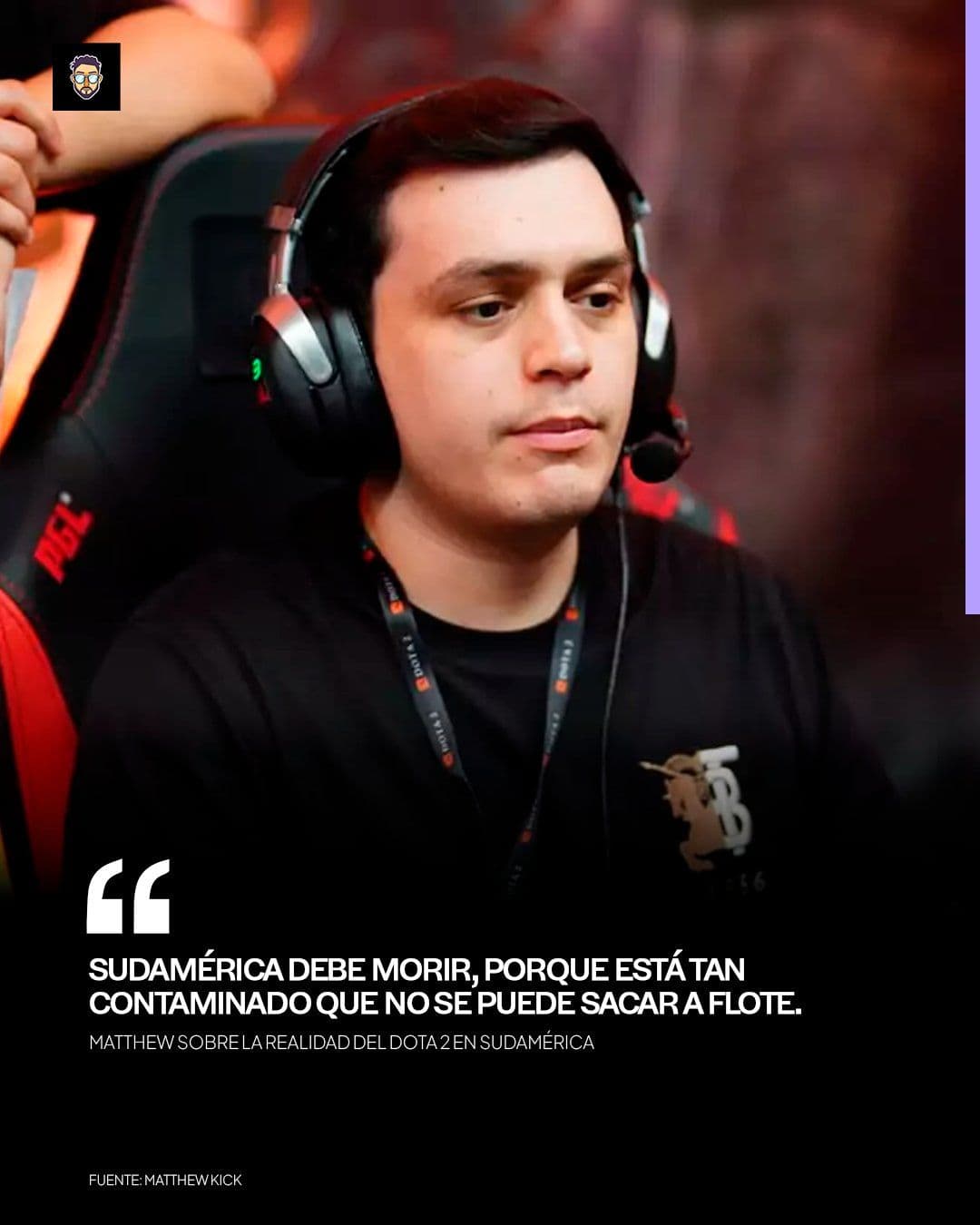
The region still has a competitive base. In June, 34 teams entered the South American open qualifier for The International 2026. Ten teams then reached the closed qualifier stage, which had one place at the main event. LGD Gaming won that place after beating PlayTime 3–0 in the closed qualifier final.
The roster came from the former HEROIC South American lineup, while PlayTime had already established itself as one of the region’s main contenders.
That result shows the region can still produce teams that reach the highest level. The problem is that competitive access alone does not guarantee trust. Teams need clear rules, reliable reporting channels, and consequences that apply to players, coaches, and staff.
The ESIC decision gives the region three concrete points for a reset.
First, an attempt to manipulate a match can result in a ban even if the planned score does not happen. Second, failing to report a corrupt approach can lead to a long suspension even when active manipulation is not proven. Third, the sanctions can cover roles beyond the player slot, which limits the possibility of returning through coaching or team management.
Those rules can help honest teams separate themselves from organisations linked to manipulation claims. They also give tournament operators a basis for removing people who try to return under a different role or team.
What Needs to Happen Next
The bans can become a starting point for a South American Dota 2 recovery only if organisers apply the rules consistently. A few public sanctions will not remove match-fixing from lower-tier competitions.
The next steps include faster investigations, clear decisions, protection for people who report corrupt approaches, and checks on staff members as well as players. Tournament operators also need to explain eligibility decisions when a team loses members during an investigation.
Valve, PGL, ESIC members and South American organisers each control different parts of the competitive system. ESIC bans apply to ESIC member events and recognised activity. Other organisers can issue separate sanctions, as PGL did in the TaiLung case.
The region also needs more stable routes for new players. The 2026 International qualifier included open events with dozens of teams, but South America received only one place at the main event.
Clearer paths into paid competition would give players more reasons to remain within official events instead of relying on informal matches where oversight is weaker.
Follow Strafe Esports for all the latest Dota2 news, and our X account for the latest content and coverage. Also, stay tuned to Strafe YouTube for exclusive interviews, press conferences, and more.
Feature image credits: ESIC
Read also:
VALORANT Champions 2026 Group Stage Pick'Ems Guide and Predictions
G2 Caps Hall of Legends Pass: Best References and Inspiration
![Esports to Exit Asian Games After 2026, New Dedicated Event Confirmed for 2027 [UPDATED]](https://strafe-uploads-prod.s3.us-east-1.amazonaws.com/TEAM_KOREA_318e4cb137.jpg)