
 en
en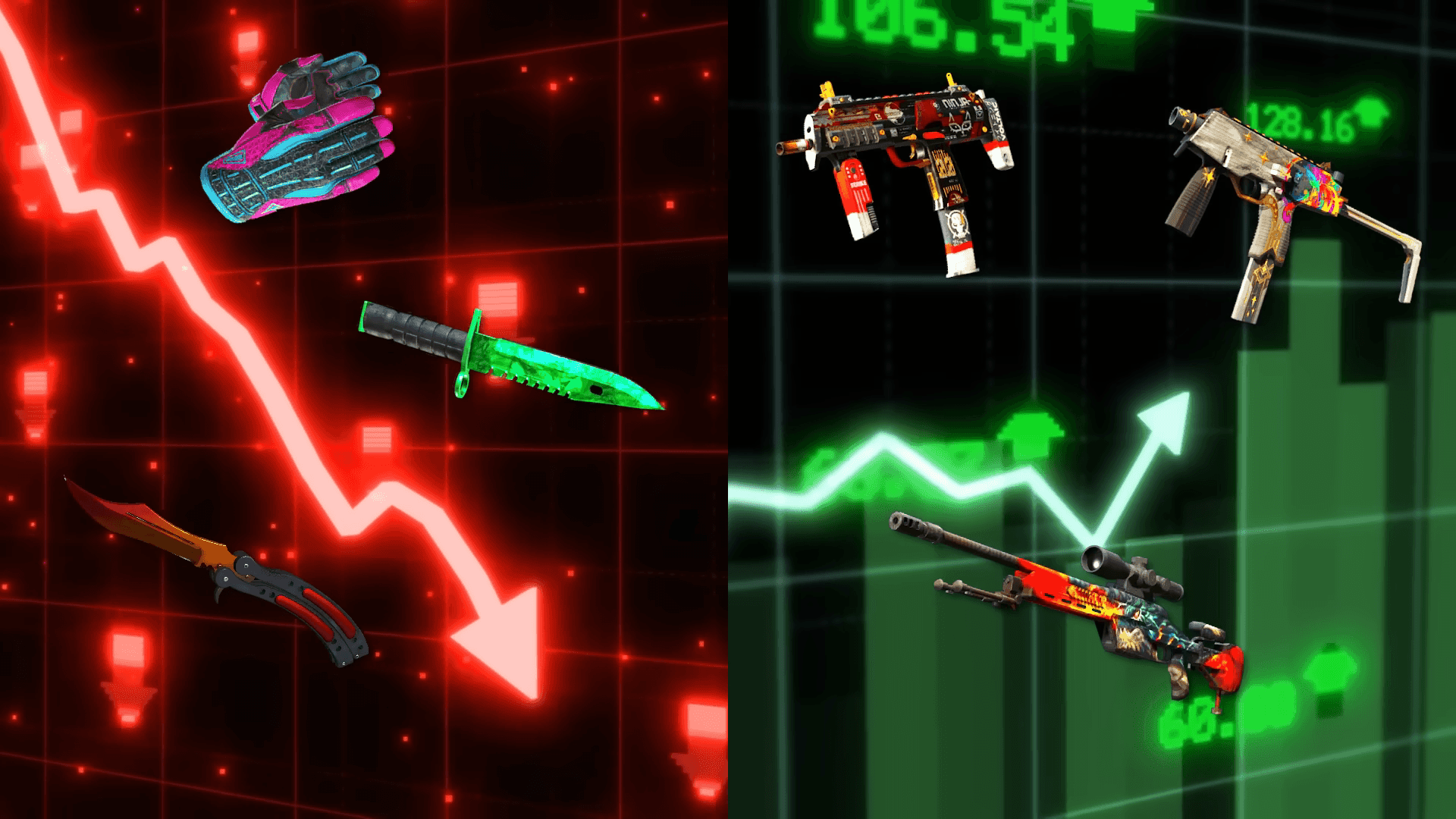
Did Valve Kill the Counter-Strike 2 Market? Gold Trade Up Aftermath
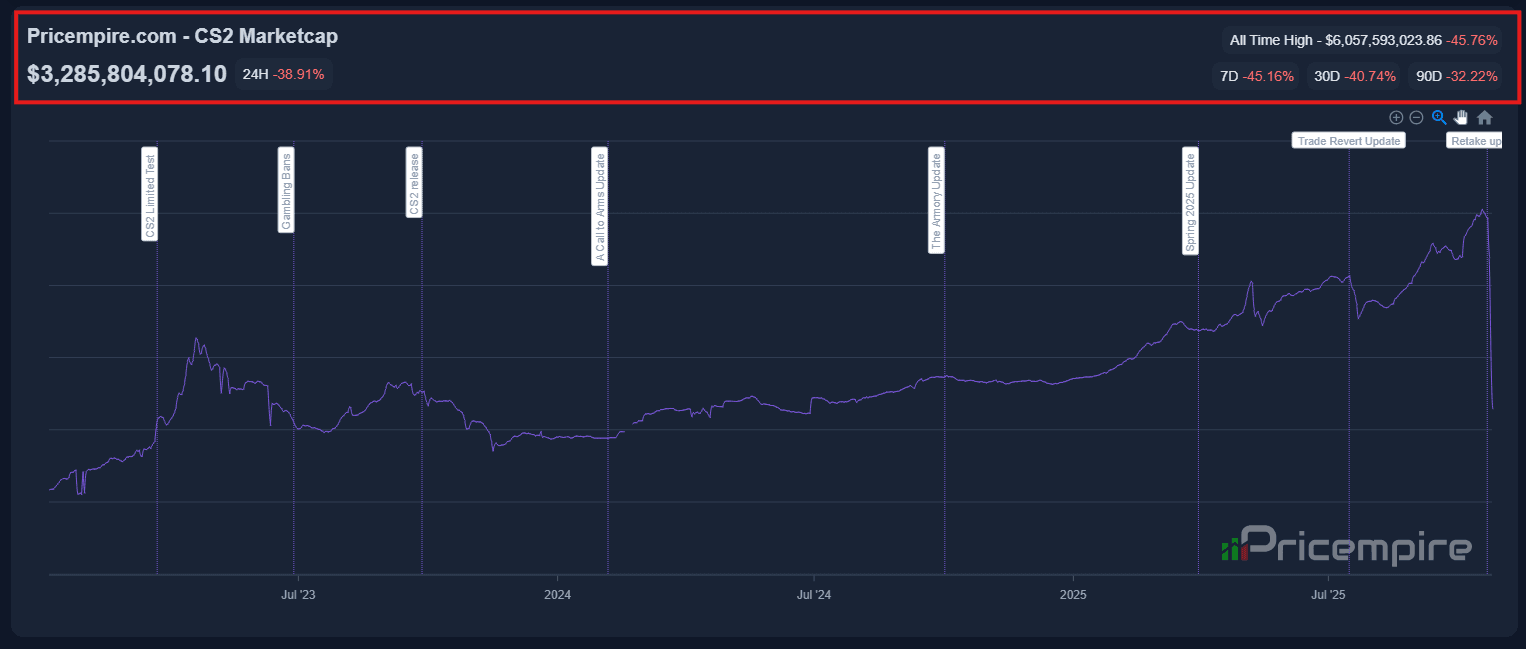
On October 22nd, Valve released one of the most disruptive updates to Counter-Strike 2. The update introduced an unexpected Red-to-Gold trade-up functionality that heavily affected the CS skins market. In the aftermath, the market lost $3 billion in valuation — 50% of its recent high — in less than 48 hours. Previously highly sought-after rare knives and gloves dropped up to 80% in value.
On the surface, the update should mean cheaper knives and gloves for the majority of the player base, but what does the update really mean? What was Valve’s intention behind it?
What Does the Knife/Glove Trade-Up Mean?
One of the biggest problems with the update is the older knives and gloves that previously necessitated a significant investment are much more accessible now. The legendary Butterfly and Karambit knives, which once demanded an average investment of $2500 and upwards, are now cheaper and easier to obtain.
To understand this, consider obtaining a Butterfly Knife
If you open cases:
Mathematically, on average, 385 unboxings will likely yield a Gold. That means:
- 385 cases × $2 key = $770 in keys alone
- If the case has only Butterfly knife i.e. the Operation Breakout Weapon Case ($10 each), that’s ~$3850
- Even choosing the cheapest Butterfly case (Dreams & Nightmares at $2.5) totals ~$1735 — though chances are lower
- So on average, a minimum of ~$2500 investment was needed for a Butterfly Knife
Now, with trade-ups:
5 Coverts from the Operation Breakout Weapon Case guarantee a Butterfly Knife:
- At ~$130 per Covert, that’s about $650 total — and it guarantees a Knife
This means that not only did the supply for the older golds increase, they are much more accessible than they previously were. This applies across the board — knives and gloves that were already in-game are now easier to obtain, and thus less rare.
Another interesting factor to consider moving forward is: 5000 Mil-Specs (Blues) now effectively guarantee a Gold. Since players get 5 Blues in every 6–7 cases, there’s an upper limit to the number of cases you have to open before hitting a Gold or trade up to one. This previously did not exist, because it was all RNG.
While that statement sounds outlandish in isolation, it explains why older Golds suddenly became less valuable. Because on average, there will now be more Golds per 1000 cases opened.
To understand this, consider the following:
Before the update, 1000 cases yielded roughly:
- 2–3 Golds
- 6–7 Reds
- 32 Pinks
- 160 Purples
- 800 Blues
With the trade-up system (after removing 10% for StatTrak):
- ~700 Blues → 70 more Purples
- ~210 Purples → 21 Pinks
- ~50 Pinks → 5 Reds
- ~5 Reds → 2 additional Golds
Effectively, the number of Golds per 1000 cases doubles. And with millions of older cases already opened, the market was flooded with extra Golds that didn’t previously exist. This consequentially crashed the market cap by 50% (coincidence).
Why Did Valve Halve Their Own Economy?
The first thing to note: the market cap doesn’t directly profit Valve. While case openings do generate revenue, secondary trades over $2000 (which Steam doesn’t support) bring Valve no money. So, while the CS market thrived with millions in trades, Valve couldn’t control or profit from it.
From Valve’s perspective, this unregulated market — rife with manipulation and out-of-hand pricing — needed control. The October 22nd update was essentially Valve’s way to “regulate” the market’s value. While not intended to kill the market, it ensures more transactions happen via the Steam Market. It was their way of saying: we control the market.
This update also increased the price of cheaper Reds to align with Valve’s perceived value (as seen in the Genesis Collection) while making Golds cheaper.
Especially considering the trade updates we have got over the past year, Valve has taken steps to reduce reliance on third-party trading sites and add more roadblocks to their functionality in an attempt to bring back the market to the controllable Steam market. The only group truly hurt by this are the traders and collectors who depended on these sites.
The Gold Trade-Up Aftermath
Whatever Valve’s intentions, the aftermath was far harsher than anticipated. Almost everyone with a significant inventory “lost” money. Skin traders and collectors lost millions overnight. Trust in the stability of CS skins — and in Valve — was shattered. Panic selling ensued, sharply driving prices down.
The market cap dropped from $6 billion to $3 billion. While it has stabilized for now, further drops are expected when newly crafted Golds hit the market on October 30th.
Many heavily invested collectors faced severe financial and emotional strain. According to CS community member Eugenio8a8 and his sources, more than 15 people reportedly took their own lives following the update — the most heartbreaking collateral of all.
Are Golds Affordable Now?
No — not really. Unless $100 for a digital item seems affordable, Golds remain out of reach for most players. The most desirable Golds still cost $400–$500.
For Valve, however, the update achieved its goal: more Steam Market transactions and increased accessibility for average players, even if not full affordability.
Moving forward, more players will have access to desirable skins without outlandish prices. It also discourages malicious manipulation of skin prices for profit. In a sense, this was a market-wide reset — and a reminder that buying CS skins isn’t a fiscally responsible investment, but rather a luxury expense akin to gambling.
Follow Strafe Esports for the latest Counter Strike 2 news and our X account for the latest content and coverage. Also, stay tuned to Strafe's channel on YouTube for exclusive interviews, press conferences, and more.
Featured Image Credit: TDM_Heyzeus
Read More:
Counter-Strike 2 2026–2028 Event Calendar: Every Announced S-tier Tournament
How Knife/Glove Trade Ups Work in CS2: The Complete Guide
CS2 Skin Market Drops $2 Billion After Latest Update
Counter-Strike 2 Update Brings Back Retakes and Introduces Knife-Glove Trade Ups