
 en
en
G2 CEO Discusses Expansion into Traditional Sports, Challenges, and the Future of G2 - "Similar to the Yankees"

According to their own estimation, G2 Esports are already the Real Madrid of esports. Having come so far in an environment that is still so young, the question now is: what's next for G2?
Last year (2025), G2 announced they would be stepping into the world of traditional sports as they entered the Kings League in Germany. Just seven months later, G2 FC became champions of Germany. After a swift rise in the Kings League, though, it appears G2's expansion into sports may be far from over.
Strafe Esports had the chance to sit down with Alban Dechelotte, CEO of G2 Esports, for an exclusive interview. During the conversation, Dechelotte was able to discuss G2's long-term plans, the relationship between sports and esports, and their motivation to break into traditional sports.
G2 Break the Mold
Traditional sports organizations entering the esports scene is nothing new. Teams as big as Barcelona or Paris Saint-Germain have featured several teams across different esports titles over the years. In Germany, more specifically, FC Schalke 04 announced their first League of Legends squad as far back as 2016.
When it comes to esports organizations fielding traditional sports teams, however, the phenomenon is not quite as common. So, what exactly prompted G2 to make the move?
"The two ways for us to expand is to capitalize on our two strengths, competition and storytelling. In competition, because we are very strong in the strong games already, League of Legends, VALORANT, and Counter-Strike. [...] We said, well, we love competition. Why don't we look for competition outside of gaming? So that was the thinking."
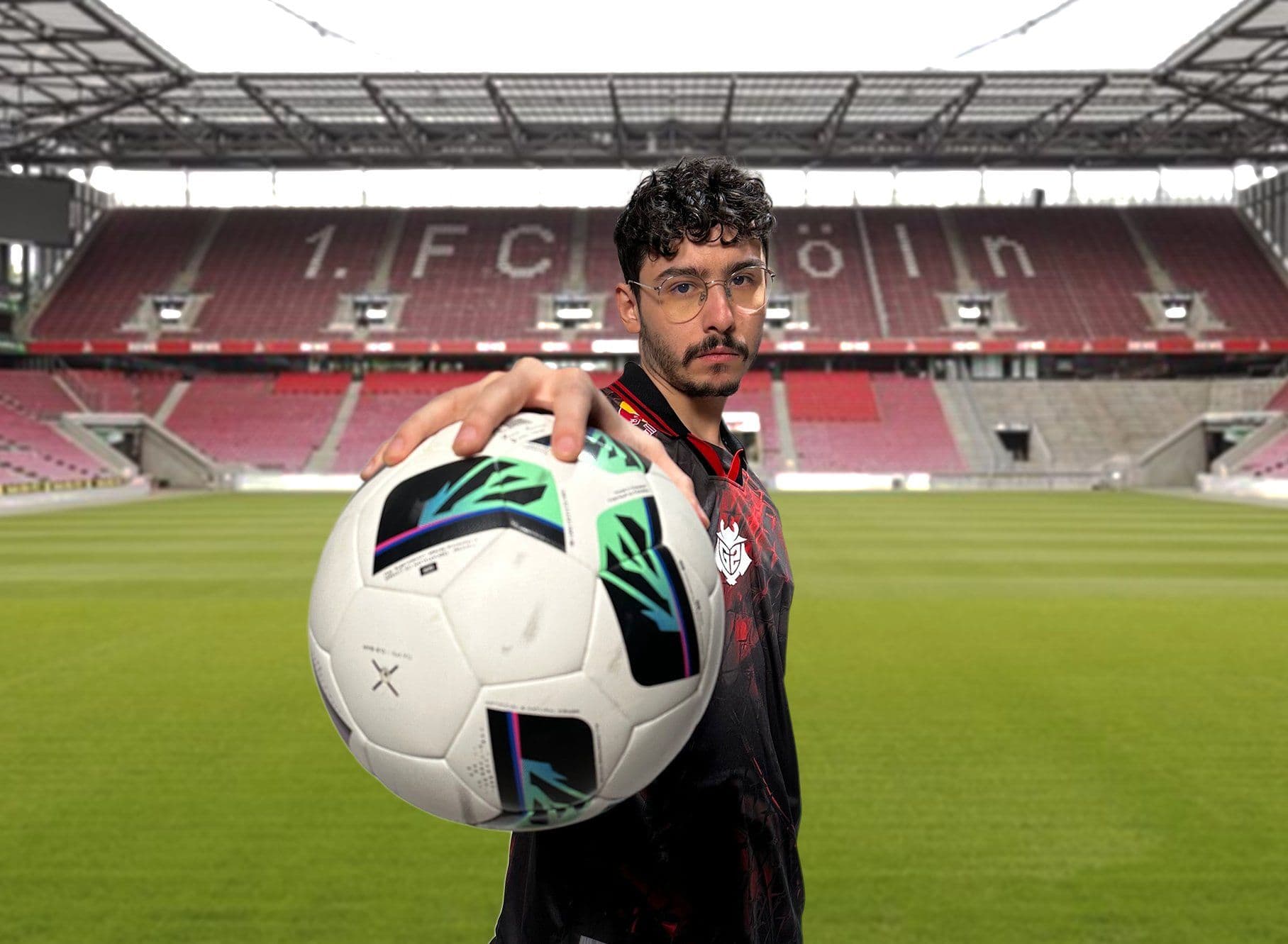
After almost a year in the Kings League, G2 are looking to continue to push the envelope. According to Dechelotte, G2's expansion into sports is "not finished."
"We are talking with motorsports organization. We are evaluating options in fighting sports. We are looking for augmented sports with technology or other influences. We are verifying constantly what we can do."
Why Start with the Kings League?
Despite constantly evaluating their options, G2's journey into sports started with the Kings League. According to Dechelotte, the reason for this simply came down to G2 wishing to stay true to themselves.
"Some leagues told us that we should not be called G2 anymore. We should change our name. And so we decided not to go for these ones. Some leagues told us that we cannot exist as G2."
In the end, the Kings League worked out perfectly. This is not only because "Gérard Piqué knows G2 very well," but also because the German league allowed G2 to continue to be G2.
"We're a diverse international collective, not a single person, but a collective. We want to bring this to the Kings League."
Afterall, Dechelotte feels confident that "football is the king of sports."
The Final Objective: The G2 of Sports
G2 may only just be taking its first steps in the world of traditional sports, but this does not stop the organization for thinking big. Big enough, in fact, to look to match titans of the scene such as Real Madrid, the Yankees, or the All Blacks. Or as Dechelotte puts it: "In the next 10 years, we aspire to become the G2 of sports."
But, what does this mean exactly?
"When you think about Ferrari, when you think about the All Blacks, when you think about the Yankees, these brands are not standing just on one foot, which is like dominating their sports. They also mean something for people outside of their sports. And so that's what we decided to take as a line. Not only do they have a level of competitivity that is important in sports, but they have a significant meaning as a brand, as an organization, outside of sports. And I think that's what we aspire to for G2."
Sports & Esports: Challenges and Similarities
From the outside, sports and esports may look like two rather similar worlds. Players make up a team, that team must practice, compete, and look to win. According to Dechelotte, the biggest similarity between the two is actually rather simple: "winning or losing is very important."
With that in mind, it's no surprise that Dechelotte feels particularly proud of G2's Kings League squad after the team managed to win the German league on its very first year in the sport. "I'm very proud of that. And I think this has a huge impact on the morale and the energy that we put in," added G2's CEO.
So where, then, do the biggest differences between sports and esports lie? Dechelotte "would call it stupidly as simple as injury."
"In the final of the Kings League Germany, we had three players injured. That's a lot for us. We're not used to that possibility that on a shock on the field, you're going to lose the players for the rest of the season."
As simple as it may sound, this is something Dechelotte finds to be an important "structural difference" when it comes running a team in esports and running a team in traditional sports.
Arbitrary setbacks like injuries aside, there's one other important challenge G2 needed to account for when entering the world of sports: misconceptions.
Bridging the Gap Between Worlds
According to Dechelotte, one of the first big misunderstandings between esports and sports is the fact that "most of the sports organizations think that esports is about sports simulation," something he categorizes as a "massive missed opportunity."
This leads sports clubs to enter into esports through games like EA Sports FC (formerly FIFA) or NBA 2K, where they will go on to tap into the same audience over which they already hold a grip, missing out on the opportunity to grow their audience.
"So I think it's a missed opportunity that they don't see esports as a diversification. They see it as an extension. And I'm glad they are not seeing it because it gives us some space for us to grow."
Failing to grasp esports for all that it really is ultimately leads sports to underestimate esports and everything in it. Dechelotte, however, doesn't necessarily see this as a bad thing when it comes to G2's expansion into sports. If anything, he urges teams to "keep understimating us."
"This is like fuel for us to grind and win and surprise you again. We love to be challengers."
Comparing Revenue: Where Do Esports and G2 Stand?
Given how young the esports world still is, we cannot expect it to compete with some of the biggest sports in the world in terms of revenue. Over time, G2 has grown into one of the biggest esports clubs on the planet, possibly "earning more revenue than any handball, volleyball, or rugby club in Europe."
And yet, there's still plenty of room to grow. In Dechelotte's eyes, G2's current place is not particularly hard to define:
"If you compare yourself to football, we're probably the same size as a second division club in the Bundesliga. And if you compare yourself to the NBA, to the NFL, then we are dwarfs. So we are on our journey to scale and to become what we want to become."
And to accelerate your growth, you need to understand the business model you're working with. In European football, this model comes down to "40% sponsorship, 40% media rights, and 20% game day."
Given G2's size and popularity, Dechelotte feels confident that they are "competitive because we are global, because we are targeting a younger audience." This sets up G2 to be "very competitive pound for pound with a traditional football club" in terms of sponsorships.
Teams benefitting from media rights, meanwhile, is practically unheard of in esports. And yet, Dechelotte declares that he actually prefers it this way.
"Instead of blocking access to our fans with paywalls and exclusive platforms and things like that, all the publishers have the best interest to open their viewership to anyone, everywhere, anytime. But in return, they share revenue with us from the digital items. So it's a win-win."
A Virtual G2 Stadium?
Last but not least, we have game day revenue. By filling up massive stadiums week in and week out, sports clubs manage to create a large stream of revenue in the form of tickets, merchandise sales, hospitality, etc. This is one aspect esports still struggles to match.
The world moving towards an increasingly virtual life is one trend that does not seem to be slowing down, however. With this in mind, Dechelotte expects the solution to the stadium problem will be to one day have a "virtual stadium of G2."
With this in mind, the future for both G2 and esports continues to look bright:
"I'm very optimistic. I think it will be a different model, but I think it's a very future-proof model."
Follow Strafe Esports for the latest news on your favorite esports, and check out our X account for the latest content and coverage. Also, stay tuned to Strafe's channel on YouTube for exclusive interviews, press conferences, and more.
Featured image credit: Kings League
Read more: