
 en
en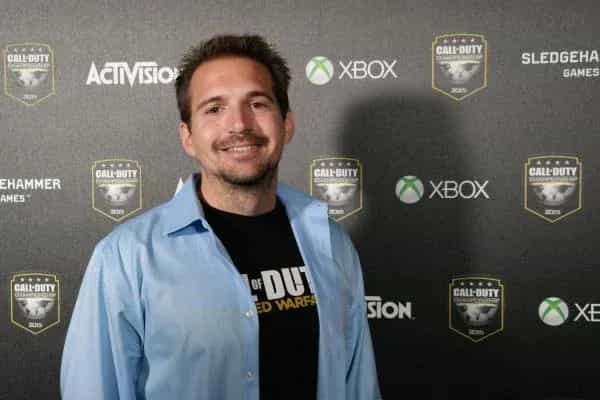
"You're Going to Upset Everybody" - Ex-CoD Director Greg Reisdorf on Pros vs Casuals, Leaks, and Developer Ego

Greg Reisdorf served as Multiplayer Creative Director at Sledgehammer Games for over 15 years before departing in early 2025 to co-found Oncade, a direct-to-consumer game distribution platform.
After 15 years shaping Call of Duty's multiplayer modes across titles like Advanced Warfare, WWII, and Black Ops Cold War, Greg Reisdorf has seen every version of the franchise's internal friction up close.
Now on the outside as co-founder of Oncade, he's talking openly about the debates that never made it into patch notes: how to balance pros against casual players, why Activision's recent legal crackdown on leaker TheGhostOfHope is only solving half the problem, and why the biggest threat to a franchise isn't its players but its own developers.
We'd like to extend our thanks to Hellcase for facilitating this conversation and giving Strafe Esports the opportunity to pose these questions to Greg Reisdorf.
The Pros vs. Everyone Else Problem
Ask anyone what the central tension of live-service game design is, and they'll give you some version of the same answer: trying to keep pros, hardcore grinders, and casual players all in the same ecosystem without any one group feeling alienated. Reisdorf spent 15 years navigating that exact tightrope at Sledgehammer Games, and he's refreshingly blunt about how messy it gets.
"You get all these teams together and they are like, we do not like this gun. We do not like UAV. We do not like mini maps," he recalls of conversations with pros and league representatives. The problem was that those same mechanics existed for a reason.
"Everybody plays with it. We do not like UAV. We do not like mini maps. Whatever else you want to talk about… well, we built that, and it is here because it balances out this side of the game."
What made those discussions particularly difficult, he explains, was separating genuine feedback from familiarity bias. Teams would come in demanding the removal of systems that simply weren't part of last year's competitive build.
"That was not there last year. You are just trying to play with what you played with last year. So do we force you to use this or not? Those are rough conversations."
When a studio has designed a feature to serve the majority of its player base, being told by a small elite to remove it puts developers in an impossible position.
Why Call of Duty Can't Fully Split Its Audience
Given how different those player groups are, the obvious question is, why not just fork the game entirely? Separate competitive and casual rulesets, fully divergent modes, maybe even separate titles. Reisdorf pushes back on that instinct hard, using an analogy that cuts straight to the brand-level risk involved.
For him, Call of Duty — across all its different game modes and versions — needs to feel like the same game in the way baseball is always baseball regardless of its different variations like T-ball or softball. "They play kind of the same game. They run around bases and everything else, but you do have shorter bases, the games are not as long, those types of things."
The mechanics stay consistent even as the stakes and format change. Diverge too far, and you stop being one franchise playing multiple ways; you become two different games that happen to share a name.
"There are areas you can model where you still feel like you are playing. I am a baseball player, and you are playing t-ball or whatever, sure, but I think you kind of have to at some point or else you are going to upset everybody."
It's a simple idea: one franchise, a spectrum of experiences, but it explains why so many balance decisions that look illogical from the outside make sense when you see the whole board.
Activision vs. TheGhostOfHope: Right Move, Wrong Target
Earlier this month, prominent Call of Duty leaker TheGhostOfHope announced his retirement from leaking after Activision issued a formal legal demand, citing the "leaking and disseminating of confidential information" related to the franchise. The community reaction was split, with many pointing out that the crackdown came immediately after the official CoD account publicly denied one of Hope's claims about a standalone Zombies game and Modern Warfare 4.
Reisdorf's take on the situation is measured and more targeted than the public debate has been. On one hand, the legal action is completely rational from a business standpoint.
"As a business, Activision has to protect its IP. They have huge amounts invested into market, if they are not taking legal action it would be a big problem."
A major publisher ignoring leaks of confidential material would effectively signal open season on every future reveal. But pressing a leaker with a legal demand is, in his words, "really the small piece of the puzzle." The real story is almost always internal.
"Those leaks are most likely from an internal source who is disgruntled and leaking them to prove a point or for some type of social gain."
The person posting on X is downstream of the actual problem. "The leaks will find a way out and they really need to find the internal source and take legal action there."
Leaks as Unwanted Feedback Loops
From inside a studio, discovering a significant leak is more personal than it looks from the outside. "Major leaks are never fun and feel like an internal betrayal," Reisdorf says bluntly. The question it forces you to ask about your own team is an uncomfortable one: "Who on the team is so tilted about a design they are willing to put their career in jeopardy because they feel like they don't have a voice or stake in the game?"
That said, he doesn't dismiss leaks as purely destructive. There's an accidental upside that studios rarely admit: leaks function as an unsolicited design review.
"They do offer a glimpse of early design validation. If early enough, pivots can happen, and changes can be made based on core community sentiment — if the developers are listening and want to satisfy that core audience."
When a leaked feature lands badly with the community, that response is data. The question is whether the studio is in a position to act on it.
The Real Problem: Developer Ego vs. Player Sentiment
This is where Reisdorf's criticism sharpens into something more uncomfortable for the industry. He identifies a mindset that, once it takes hold in a studio, makes all external feedback impossible to process honestly.
"Many times developers may think they are beyond the core audience and assert 'the audience doesn't know what they want or what is good for them. This is a key issue."
It's a posture that's easy to slide into, especially on a franchise as dominant as Call of Duty, where years of commercial success can breed the conviction that the team knows better than any subreddit or X troll.
But underneath the arrogance is something more human: self-preservation. Getting a feature into a game like Call of Duty takes months of internal fights and capital. By the time it ships, your reputation is tied to it, and nobody wants to be told by a Reddit thread that they got it wrong.
"Most of the time a lot of time and effort have been spent internally building consensus and personal reputation for knowing what is 'good.'"
When a leak triggers community backlash that contradicts all of that internal investment, "pride, reputation, and value to the company is on the line." In that context, "self-preservation can be a pretty big driver to sticking your head in the sand."
What It All Adds Up To
Reisdorf's candor, taken as a whole, sketches something the franchise's official communications never will: a picture of Call of Duty as a system under constant pressure from multiple directions simultaneously: pro players wanting their sandbox, casual players wanting accessibility, marketing wanting clean reveals, and individual developers protecting ideas they've spent careers building.
None of those pressures are going away. And with the franchise now under Microsoft, the 'windows' to pivot, recalibrate, and actually listen are only getting narrower. If there's one takeaway from Reisdorf's perspective, it's that the version of CoD the community wants is one where the studio hasn't convinced itself it already knows what that looks like.
Stay tuned to Strafe Esports for more Call of Duty news and information. Don't forget to follow us on Social Media for real-time updates of your favorite game.
Feature Image Source: High-Def Digest